 Each year, Construction Safety Week reinforces a shared industry commitment to protecting people on jobsites. At Timberline, that commitment comes down to one critical action: how we respond when risk is identified. The 2026 Construction Safety Week theme, “All In Together: Recognize, Respond, Respect,” highlights that preventing serious incidents requires more than awareness. It requires action. It requires teams that can anticipate risk, put controls in place early and adapt as conditions change.
For our team, safety is defined by that response. It is how we translate planning into protection across every phase of a project, especially in complex, occupied and high-risk environments.
Managing Construction Safety in an Active, High-Security Environment
On a recent project in Johnston, Rhode Island, Timberline operated within an active corporate facility with strict confidentiality requirements, heightened security protocols and multiple phases of work. Maintaining safety required constant coordination, proactive planning and disciplined execution.
The facility was governed by FM Global standards, among the most stringent loss prevention and risk control requirements in the industry. Meeting these expectations required a higher level of accountability across all work activities, from sequencing and housekeeping to fire protection, hot work and trade partner coordination. Our approach included:
- Regular safety walkthroughs and formal compliance inspections
- Adjusted sequencing to safely manage occupied and secure areas
- Enhanced communication protocols to support phased turnover
- Expanded compliance reviews for trade partners new to the site
Because several subcontractors had not previously worked under FM Global and owner-specific requirements, Timberline prioritized upfront vetting before mobilization. This, combined with ongoing oversight, ensured expectations were clearly understood and consistently applied. The result: zero lost-time incidents across more than 33,700 man-hours worked.
 Reducing Fire and Flood Risk in an Occupied Building
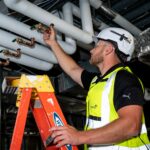
In occupied environments, safety starts with removing risk before work begins. On a life science interior project in Portland, Maine, Timberline completed extensive demolition and mechanical upgrades on the eighth floor of an active building. Overhead work and live sprinkler systems introduced significant risk to both workers and occupants below. Rather than relying on minimum code requirements, Timberline reengineered the construction approach to reduce exposure wherever possible. Key actions included:
- Temporarily disconnecting active sprinkler systems to eliminate flood risk
- Installing interim heat detection to maintain life safety coverage
- Developing a site-specific NFPA 241 fire safety plan despite not being required
- Coordinating directly with the Portland Fire Department, including on-site walkthroughs
Additional controls included clearly defined egress routes, a designated external muster point, posted emergency procedures and bi-weekly safety inspections. Structured communication and real-time reporting ensured consistent oversight. By addressing hazards before work began, the team reduced risk and protected both the workforce and building occupants.
What “Respond” Means at Timberline
At Timberline, response is not a single moment. It is a continuous process. It means reassessing conditions, adjusting controls and taking action before risk becomes reality. It means clear communication, proactive planning and a willingness to stop and rethink the approach when needed. This mindset has been recognized with the Associated Builders and Contractors MA STEP Diamond Award for three consecutive years, reflecting consistent performance and leadership in safety.
During Construction Safety Week and throughout the year, our focus remains the same: taking action early, adapting as conditions change and ensuring every person goes home safely.